
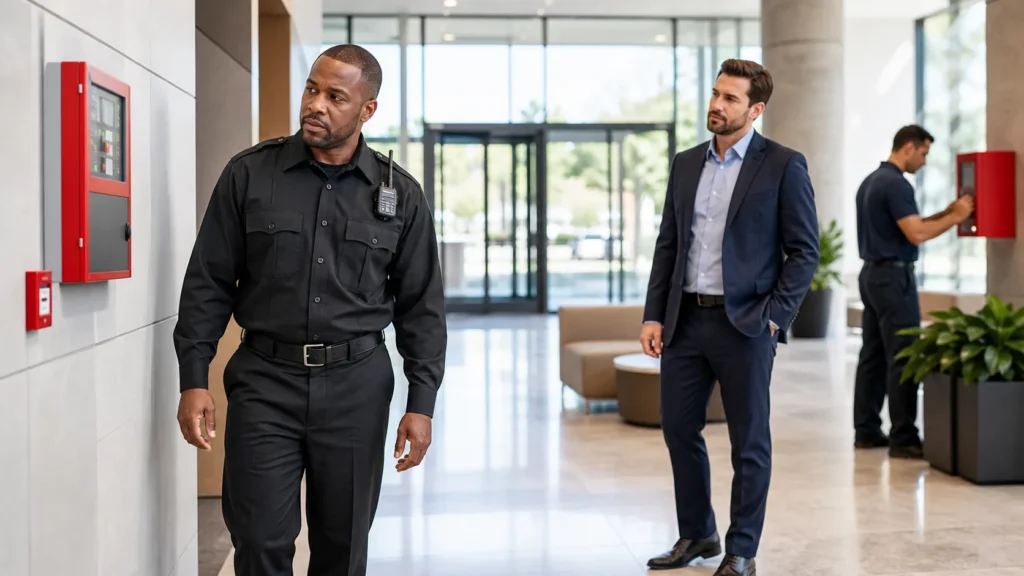
A fire alarm failure needs immediate attention because people may not receive timely warning during a fire or emergency. When a system is impaired, property owners, managers, and contractors may need to arrange fire watch coverage while qualified technicians work on repairs.
We recommend treating every alarm issue seriously until the cause is identified and the proper authority provides direction. Below, we explain when fire watch guards for fire alarm system failure may be needed, what trained guards do on site, and why clear records matter until the system is back in service.
Act Fast to Protect People and Maintain Compliance
An impaired fire alarm, sprinkler system, or related fire protection system can create a life-safety concern quickly. Even if there is no visible fire, the property may be left without dependable detection, notification, or monitoring. That means occupants, staff members, visitors, and residents could face added risk if an emergency develops.
Requirements for fire watch can vary based on local fire code, the authority having jurisdiction, the type of building, and the extent of the impairment. A fire marshal may require continuous patrols, specific documentation, or other safety steps before normal operations can continue.
The safest response is to report the issue promptly and follow the direction of qualified alarm professionals and local fire authorities. We also recommend notifying the people responsible for the property so everyone understands which areas are affected and what temporary safety procedures are in place.
Know When a Fire Alarm Failure Triggers Fire Watch
Not every panel message means the full alarm system has failed, but no trouble signal should be ignored. A qualified fire alarm service provider can help determine whether the issue is a limited condition or a confirmed outage that affects the building’s protection.
Common impairments that may require a response include:
- Panel trouble signals or supervisory alerts
- Loss of power, damaged wiring, or disabled devices
- Communication failures between the alarm panel and monitoring services
- Planned maintenance that places part or all of the system out of service
- False alarm problems that lead to devices being shut down for evaluation
Buildings with sleeping occupants, large public occupancy, hazardous materials, or active construction may receive closer attention because a fire can create greater risk in those settings. Fire watch may also be required by building management, an insurance carrier, or the local authority having jurisdiction.
After discovering an alarm problem, we recommend notifying the monitoring company, the fire alarm service provider, and the appropriate local fire authority as soon as possible. Management should not assume that an issue is harmless just because the panel is still powered on or the problem appears temporary. Professional evaluation and local direction help determine whether fire watch guards for fire alarm system failure are needed.
Set up a Clear Fire Watch Response Plan
Once an outage is confirmed, the first step is identifying what is affected. Is the issue limited to one area, one device type, or the entire property? Knowing the scope helps the responsible parties create an appropriate plan while repairs are underway.
A written impairment plan reduces confusion, especially when several people are involved. It should give fire watch personnel clear instructions about where to patrol, who to notify, and what to do if they observe smoke, fire, or another safety concern.
A useful plan should include:
- Affected systems, floors, rooms, and restricted areas
- Patrol routes, schedules, and guard assignments
- Emergency contacts, evacuation procedures, exits, and extinguisher locations
- Contact information for alarm technicians, monitoring providers, and property representatives
- Instructions from the fire marshal or other local authority
During an alarm impairment, continuous human observation can help fill the gap left by automated detection or notification. Depending on the situation, coverage may need to remain in place until repairs are completed, the alarm system is tested, and the responsible parties confirm that normal operation can safely resume.
What Professional Fire Watch Guards Do on Site
Fire watch guards provide an active presence when automated fire protection equipment is impaired. Their work is focused on observation, communication, and documentation, not on replacing firefighters, fire suppression systems, or emergency responders.
During scheduled patrols, trained personnel look for visible signs of danger and conditions that could increase fire risk. This may include smoke, flames, unusual odors, blocked exits, unsafe storage, unsecured work areas, or other hazards that should be reported immediately.
If an emergency occurs, guards should know how to contact emergency services, alert occupants according to the site’s procedures, and direct responding firefighters to the affected area. They can also report what they observed, where the issue began, and which parts of the property may be involved.
Assigning an untrained employee to fire watch duties can lead to missed patrols, unclear reports, and uncertainty during an emergency. Our licensed, trained personnel at ATA Guard provide fire watch guards for fire alarm system failure with dependable 24/7 coverage for commercial properties, construction sites, events, and residential communities. Consistent patrol documentation and clear communication help the property team stay informed while repairs are in progress.
Document Coverage Until Systems Are Restored
Accurate fire watch logs show that the property took the impairment seriously and maintained oversight during the outage. Patrol records should note the time of each round, areas inspected, hazards found, actions taken, and the name of the guard completing the patrol. We also recommend keeping records of communications with alarm technicians, monitoring companies, property managers, and local authorities, including when the impairment began and what repairs were performed.
Coverage should not stop simply because a technician arrives or believes the repair is complete. The system may still need testing, monitoring confirmation, and approval under local procedures before the building returns to normal operation. Preparing a fire watch vendor plan before a failure occurs can help you respond with less confusion and keep safety steps in place until the impairment is fully resolved.
Restore Protection With Reliable Fire Watch Coverage
ATA Guard provides fire watch guards for fire alarm system failure to help maintain a visible safety presence while your system is impaired. Our trained personnel can follow your site’s procedures, document observations, and support compliance efforts during the outage. For coverage tailored to your building and situation, contact us today.

