
Construction site theft is a preventable business risk that can cut into a project’s margin fast. Stolen tools, materials, fuel, and equipment create more than a missing-item problem. They can interrupt planned work, strain your team, and leave you dealing with unexpected problems when your attention should be on moving the project forward.
The damage often extends well beyond the first discovery. Replacement purchases, schedule changes, insurance paperwork, and client concerns can all follow one incident. With a clear security plan and trained personnel on site, you can spot weak points before they become costly losses.
Protect Project Margins Before Theft Takes Hold
A construction site contains many items that are easy to remove and resell. When equipment is left unattended, materials are stored near an open perimeter, or access procedures are inconsistent, unauthorized visitors may see an opportunity.
The loss can affect much more than the budget for one item. A theft incident may lead to:
- Unplanned replacement purchases
- Work crews waiting for needed tools or materials
- Delayed tasks that affect other trades
- Time spent documenting the incident and reviewing site conditions
- Questions from property owners, clients, or project partners
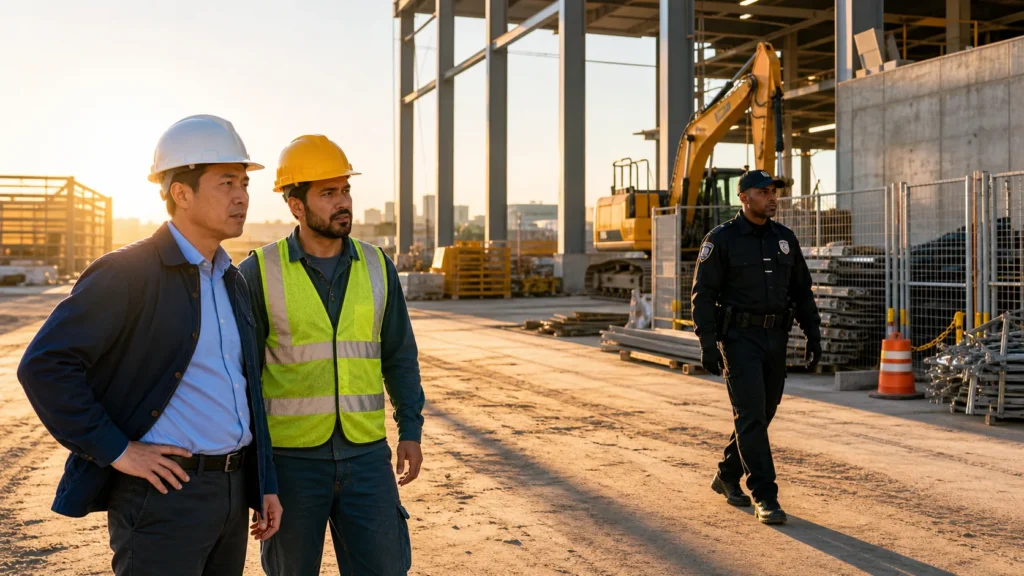
Treating theft prevention as part of jobsite planning, rather than as a response after something goes missing, can help reduce exposure. Construction site security guards can help identify weak access points, watch valuable areas, and maintain a visible presence around assets that need protection.
The Direct Losses Behind Construction Site Theft
Certain jobsite items are frequent targets because they can be moved quickly. Copper wiring, lumber, power tools, HVAC components, fuel, generators, heavy equipment attachments, and appliances may all attract unwanted attention.
Replacing these items is rarely as simple as ordering the same product again. Materials may now be harder to find, equipment may need to be rented, and a replacement tool may not arrive when your crew needs it. Even when a stolen item is covered by insurance, your project can still feel the effects of the disruption.
Emergency replacement needs can add pressure to an already tight schedule. You may need rush delivery, a temporary rental, overtime labor, or a different material source to keep work moving. Those decisions can affect the resources available for the rest of the project.
A visible guard presence helps reduce the easy opportunities theft depends on. Trained unarmed guards can monitor access points, observe activity around stored materials, check for authorized personnel, and report suspicious behavior. Coverage can be especially helpful during deliveries, after regular work hours, and when high-value equipment remains on site overnight.
How Delays and Liability Expand the Damage
Theft and property damage can affect more than the items directly involved. A missing generator, damaged electrical panel, or stolen specialized tool can leave a crew unable to complete scheduled work. Once one task is delayed, the impact may spread to subcontractors who were set to begin their part of the job next.
That chain reaction can make project management harder. Crews may need to return later, deliveries may need to be moved, and planned inspections may no longer happen on time. Because a jobsite runs on coordination, even a small theft can create a much larger operational issue.
Unauthorized entry can also create safety and liability concerns. Trespassers may damage temporary fencing, remove safety items, enter unfinished structures, or leave behind dangerous conditions. After an incident, you may need to inspect the area, document damage, repair compromised barriers, and confirm that the site is safe for workers to return.
Insurance may help with part of the financial recovery, but it is not a complete solution. Deductibles, claim documentation, coverage limits, possible premium changes, and lost work time can still leave your business carrying the burden. A documented security plan with trained personnel, access monitoring, and incident reports supports a stronger approach to managing these risks.
Construction Site Security Guards Change the Risk Equation
Theft often relies on easy access, low visibility, and the belief that no one is watching. When a professional guard is on site, the property appears actively monitored. That alone can encourage unauthorized individuals to move on before they attempt to enter or remove anything.
Construction environments also change quickly. Entrances may shift, fencing may be moved, deliveries may arrive at different times, and equipment may be relocated as work progresses. Cameras and physical barriers can be helpful, but they do not replace someone who can observe changing conditions in real time.
On-site guards can watch vulnerable zones and report issues promptly when conditions change. Their observations can help you understand where your security plan needs more attention, whether that involves an open gate, poorly placed materials, or activity near the perimeter.
Guard documentation can provide useful operational insight, including:
- Daily activity logs
- Visitor and vehicle observations
- Patrol notes from vulnerable areas
- Incident reports when unusual activity occurs
- Records that help identify recurring concerns
Over time, these records can guide better decisions about lighting, material storage, delivery procedures, perimeter controls, and site access expectations.
Build a Stronger Theft Prevention Plan Today
A useful starting point is a careful review of what is most exposed on your site. Look at unsecured equipment, poorly lit areas, open gates, temporary fencing, inconsistent visitor procedures, and valuable materials stored close to the perimeter. If access is easy to gain and difficult to monitor, it deserves attention.
Combining physical security measures with guard coverage can strengthen theft prevention efforts. Fencing, lighting, cameras, inventory controls, and access procedures work better when trained people can observe the site as conditions change. Before selecting a security provider, confirm its licensing, insurance, available service options, coverage hours, and experience with the specific risks affecting your construction project.
The strongest prevention plan is one that protects your people, property, schedule, and working relationships before a loss occurs. Reviewing vulnerabilities early and maintaining consistent oversight can help keep a single theft from turning into a larger project setback.
Reduce Theft Risks With Reliable Coverage
ATA Guard provides construction site security guards who help maintain a visible, dependable presence where it matters most. Our team can support access control, patrols, and incident response tailored to your job site’s needs. To discuss coverage for an upcoming project, contact us today.

