
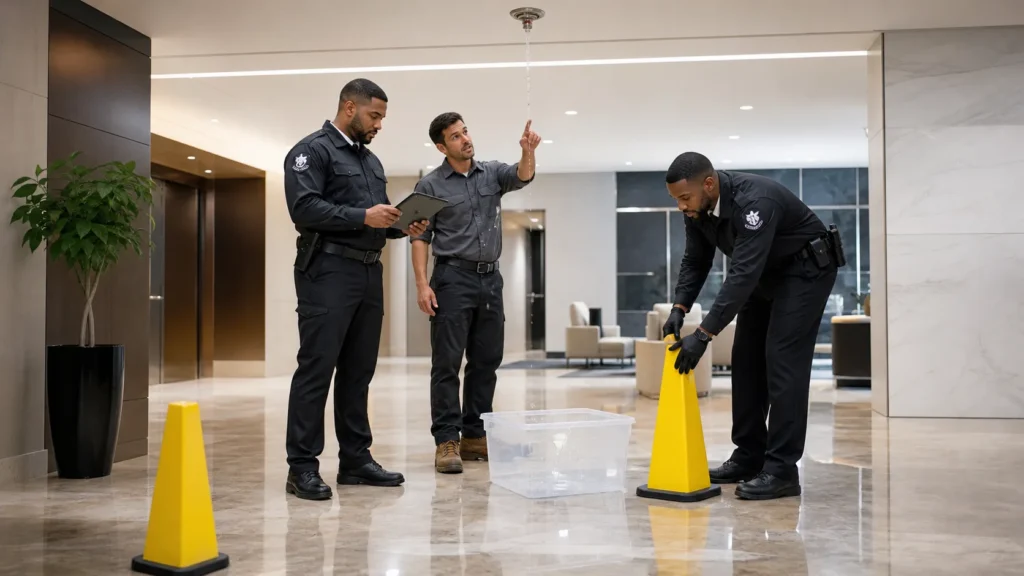
A sprinkler failure after hours needs attention right away. Whether an alarm notification points to an impaired valve, a burst pipe shuts down protection, or a repair team finds a larger problem, the risk is about more than water damage. Until the system is restored, people, property, inventory, equipment, and the building itself may have less protection if a fire starts.
We recommend treating every confirmed impairment as an organized response situation. Your first priorities are protecting life and property, following site procedures, and meeting applicable fire marshal and local authority requirements. A professional fire watch is a temporary layer of protection while qualified repairs are completed, not a substitute for restoring the sprinkler system.
Recognize the Risk of an After-Hours Outage
A sprinkler outage can affect one small area or an entire property. The right response depends on what failed, which parts of the building are affected, how long repairs may take, and what fire hazards are present overnight.
Common causes of sprinkler impairments include:
- Broken or frozen pipes
- Activated sprinkler heads and water leaks
- Damaged valves or low water pressure
- Fire pump or alarm panel problems
- Construction activity, planned maintenance, or accidental damage
Waiting until morning can leave a property exposed during the hours when managers, maintenance staff, and tenants may be off-site. A small fire that might otherwise be controlled by automatic sprinklers can grow more serious when suppression is unavailable.
A working fire alarm system still matters, but it does not put out a fire. Alarms can alert people and notify responders, while sprinkler systems are designed to help control a fire. We encourage you to consider the building’s occupancy, operating hours, stored materials, active work areas, and the location of the impairment before deciding what protection is needed.
Take Action During the First Hours
Once you confirm a sprinkler issue, start by finding out whether the impairment is partial or complete. A qualified sprinkler contractor or repair provider can assess the problem, identify affected zones, and provide an estimated repair timeline. If there is smoke, fire, or an immediate emergency, emergency services should be contacted first.
From there, follow your property’s impairment procedure and any instructions from the authority having jurisdiction. One phone call may not satisfy every obligation, especially at a large commercial site or a multi-tenant property.
Your notification list may include:
- The sprinkler contractor or qualified repair provider
- The fire alarm monitoring company
- Building ownership, management, and facilities personnel
- Tenants, occupants, or on-site supervisors
- Your insurance contact and the local fire authority, when required
Clear communication helps prevent confusion during a stressful overnight event. If part of the building must be restricted, occupants should know which areas are affected and who is managing the response. We also recommend keeping access routes, exits, riser rooms, and repair areas clear for emergency personnel and contractors.
How Fire Watch Services Keep Oversight Active
When a sprinkler system cannot be restored promptly, fire watch services for a sprinkler system outage can help maintain active oversight until repairs are complete. Trained personnel provide a watchful human presence when automatic fire suppression is impaired, particularly during overnight hours when the property may otherwise be unattended.
During a fire watch, our personnel can patrol affected areas at scheduled intervals, observe for signs of smoke or fire, identify visible unsafe conditions, and report concerns to designated site contacts. Depending on the site plan and local guidance, patrols may also include checking for blocked exits, hazardous storage, open flames, or work that could create added fire risk.
Documentation is an important part of the process. Patrol logs can record:
- Patrol times and areas checked
- Conditions observed during each round
- Notifications made to site contacts or responders
- Corrective actions taken during the impairment
- Updates on sprinkler repairs and return-to-service status
These records support communication among property managers, contractors, tenants, and fire officials. They can also show that the property took reasonable protective steps while the sprinkler system was unavailable.
A fire watch does not repair pipes, reset valves, replace alarm monitoring, or remove the need to follow fire marshal instructions. Its purpose is to provide attentive, visible supervision while qualified professionals work to restore fire protection. Larger properties, active construction projects, events, and residential communities may need continuous coverage until the system is operating again.
Prepare for Late-Fall Sprinkler Problems
October is a good time to review sprinkler readiness before colder weather arrives. Late-fall temperature changes can expose weak points in piping and building systems, especially in areas that are not regularly heated or monitored.
We suggest reviewing exposed piping, vacant units, loading docks, mechanical rooms, unheated storage areas, and active construction zones. A small leak or damaged component can become a larger after-hours issue if it goes unnoticed.
Preparation should also include an updated emergency contact list. Keep current information for your sprinkler contractor, fire alarm provider, monitoring company, facilities staff, insurance contact, and fire watch provider. It also helps to know who has authority to approve emergency repairs and who is responsible for making required notifications.
A written impairment plan can remove guesswork when an alarm comes in late at night. Your plan should identify shutoff valve and riser room locations, outline tenant communication steps, list emergency contacts, and explain when fire watch coverage may be required. When everyone knows their role, the response can begin quickly instead of becoming a scramble.
Restore Protection and Keep Clear Records
An after-hours sprinkler failure should not be treated as a problem that can wait for the next business day. Secure the affected area, make the appropriate notifications, arrange qualified repairs, and put temporary protective measures in place when required or prudent.
Fire watch coverage should remain active until the sprinkler system has been repaired, tested as needed, and formally returned to service under the proper procedures. Keep patrol logs, repair records, notification details, and return-to-service documentation together. Those records help you show what happened, how the property was protected, and when normal fire protection was restored.
Restore Protection With Reliable Coverage
ATA Guard provides fire watch services for a sprinkler system outage to help maintain a visible safety presence while your system is down. Our trained personnel can monitor the property, identify hazards, and document patrol activity for your records. Contact us to discuss coverage tailored to your property’s needs.

